

November is globally recognized as the month dedicated to raising awareness about men’s health. Health, as defined by the World Health Organization in 1948, is not merely the absence of illness but the complete state of physical, mental, and social well-being.
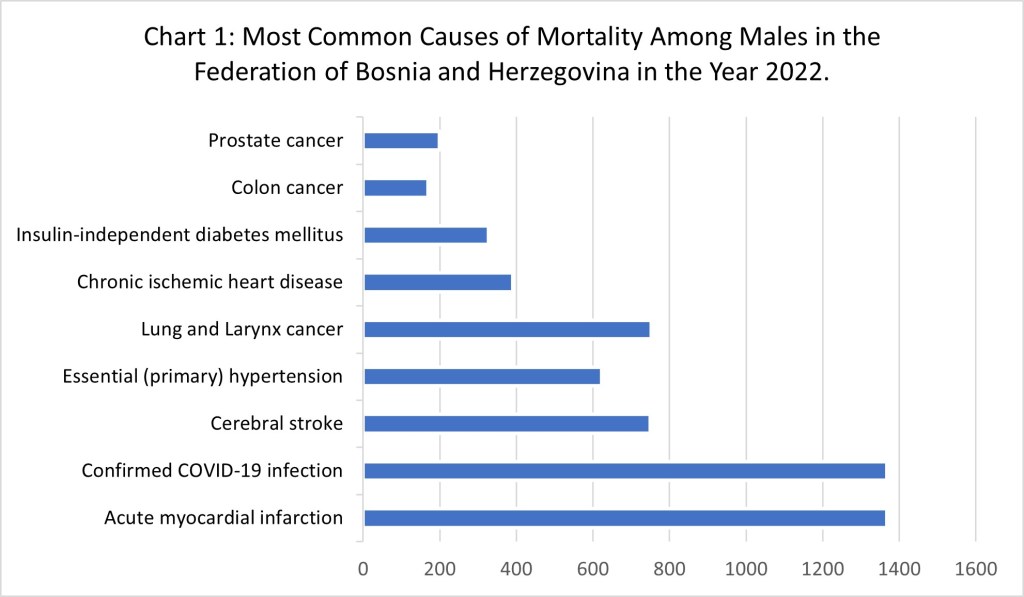
In 2022, according to data from the Public Health Institute of the Federation of Bosnia and Herzegovina, 11,711 men lost their lives. The primary causes of male mortality in the Federation of Bosnia and Herzegovina are outlined in Chart 1.
When it comes to men’s health in the European Union, based on the latest available data from 2020, sourced from Eurostat, the mortality rate is higher among men compared to women in all categories except breast cancer. The mortality rate for men per 100,000 inhabitants in the under-65 age group is highest for lung cancer. In the 65 and older age group the mortality rate is highest for COVID-19, followed by cerebrovascular diseases and lung cancer. A more detailed presentation is provided in Chart 2 and Chart 3.
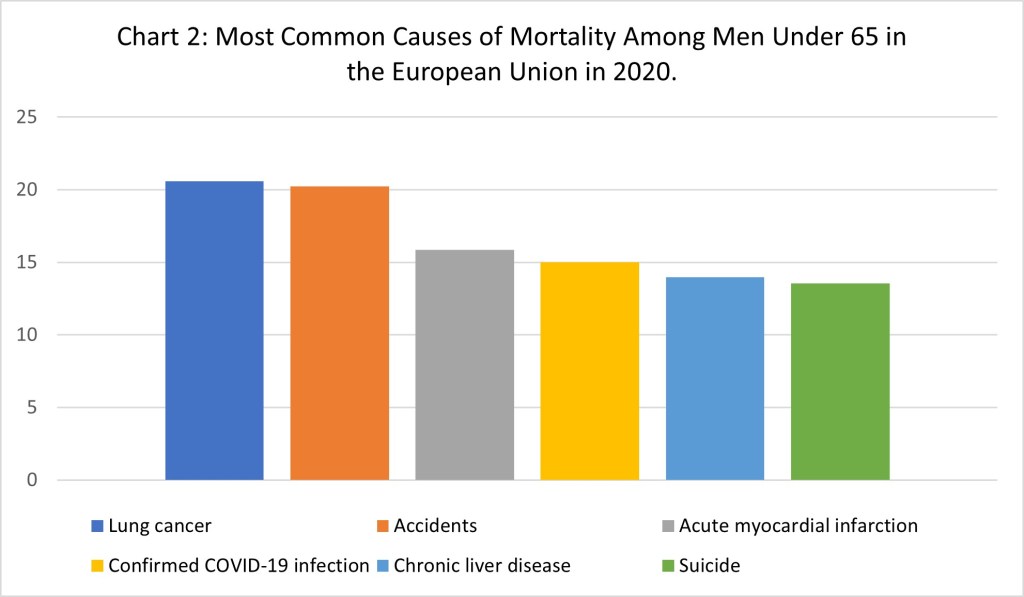

From the presented data, excluding COVID-19, it is unequivocal that greater attention needs to be given to the prevention of chronic non-communicable diseases, particularly cardiovascular diseases, and malignant diseases. The highest mortality rate in the category of malignant diseases among men is attributed to lung and prostate cancer. In Europe, the second most common cause of death for individuals under 65 is accidents while suicide ranks sixth. Therefore, there is a need to pay more attention to men’s mental health.
Regarding the preservation of cardiovascular health and the prevention of malignant diseases, nutrition plays a crucial role. Alongside nutrition, the level of physical (in)activity also plays a significant role. It has been proven that 150-300 minutes of moderately intensive or 75-150 minutes of highly intensive physical activity per week prevents malignant and cardiovascular diseases in adults. Achieving or exceeding the upper limit of 300 minutes weekly is ideal for the prevention of various diseases.
Furthermore, to maintain health, it is necessary to eliminate the intake of alcohol, nicotine, and all other psychoactive substances. An aspect that is often neglected but plays a significant role in overall health is mental health. Stress is often a trigger for heart attacks and malignant diseases in both genders. Therefore, it is essential to reduce exposure to stressors, learn to control reactions in stressful situations and seek help from professionals. Finally, it is crucial to ensure rest and quality sleep for the body to rest and regenerate.
In summary, nutrition combined with regular physical activity, mental balance, and quality sleep prevent the development of chronic non-communicable and malignant diseases.
Here are a few simple guidelines for maintaining men’s health:
- Pay attention to portion size!
- Eat slowly, chew food well and stop eating when you feel satisfied (don’t continue the meal just to avoid wasting food 😉).
- Increase the intake of vegetables and fruits. This involves consuming at least five servings of vegetables and two servings of fruits daily.
- Replace white bread and pasta with whole grain bread and pasta.
- Increase the intake of fish and lean white meat (chicken and turkey without skin). Reduce the intake of red meat (veal, beef, lamb, goat).
- Eliminate processed meat from your diet (sausages, hot dogs, etc.).
- Choose healthy sources of fats in your diet, such as olive oil, nuts (walnuts, almonds, hazelnuts), etc.
- Reduce salt intake.
- Avoid, if possible, eliminate sweetened carbonated and non-carbonated drinks. Reduce caffeine intake.
- Avoid, if possible, eliminate canned and processed foods (crackers, cookies, packaged bread, cereals, etc.) as well as various additives, such as ketchup, salad dressings, and different sauces.
Don’t forget to drink enough water – at least 2 liters per day!
For personalized advice tailored to you and your health condition, NutriBalans studio is at your disposal!
 Nutrition by MD Fatima