
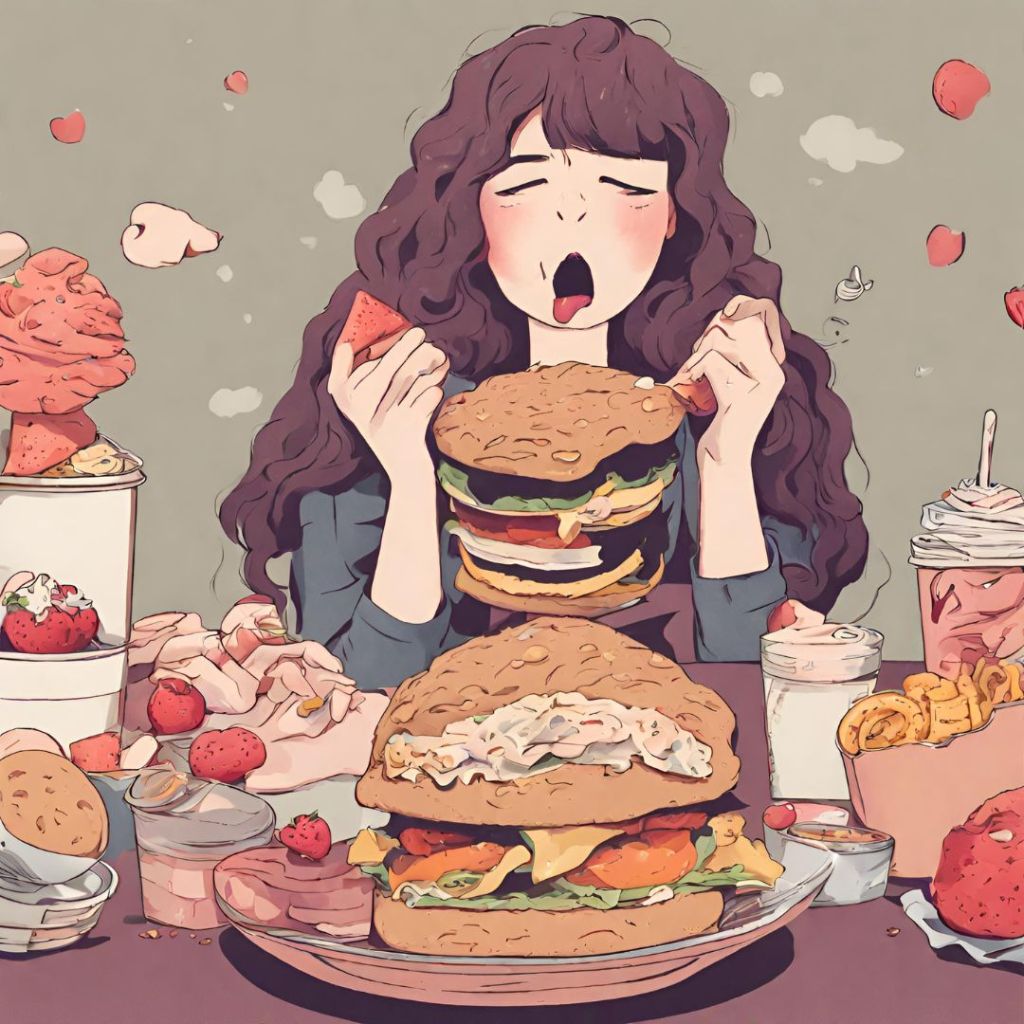
Emotional overeating is a complex disorder that involves consuming large amounts of food in response to emotional needs, rather than physical hunger. This phenomenon has become a subject of increasing interest in the field of nutrition and mental health.
Emotional overeating is defined as the consumption of large amounts of food in response to feelings instead of physical hunger. Individuals who emotionally overeat often use food as a way to cope with stress, sadness, boredom, loneliness, or other intense emotions. Emotional overeating is distinct from eating disorders like bulimia or anorexia, though it can be associated with them.
The causes and triggers can vary, from emotional, behavioral, psychological, to various external environmental factors.
Emotional causes
- Stress: One of the most common triggers. People often eat to reduce the feeling of stress.
- Sadness and depression: Feelings of sadness or depression can prompt emotional overeating as a form of comfort.
- Boredom or loneliness: Some people overeat when they feel lonely or bored.
- Anxiety: Feelings of anxiety can prompt overeating as an attempt to calm down.
- Low self-esteem: People with low self-esteem may use food as a source of comfort.
Behavioral and psychological causes
- Childhood habits: A learned behavior pattern of using food as a reward or for comfort can lead to emotional overeating.
- Negative thinking patterns: Pessimistic attitudes and negative thinking can contribute.
- Lack of emotional coping skills: Not knowing how to manage emotions healthily.
- Social pressure and expectations: Social pressures, including those related to appearance and weight.
Physiological and biological causes
- Hormonal fluctuations: Changes in hormones can affect appetite and emotional state.
- Lack of sleep: Sleep deprivation can increase the feeling of hunger and decrease the ability to manage emotions.
Environmental factors
- Food availability: Easy availability of unhealthy food facilitates emotional overeating.
- Media influence: Exposure to media promoting unhealthy eating habits.
Cultural and social causes
- Social events: Social gatherings that focus on food can prompt overeating.
- Cultural norms: In some cultures, there is an emphasis on large meals and eating as a central part of social events.
Each of these factors can contribute to the development of emotional overeating, often involving a combination of multiple factors. Understanding and recognizing these causes is key to providing effective support and treatment.
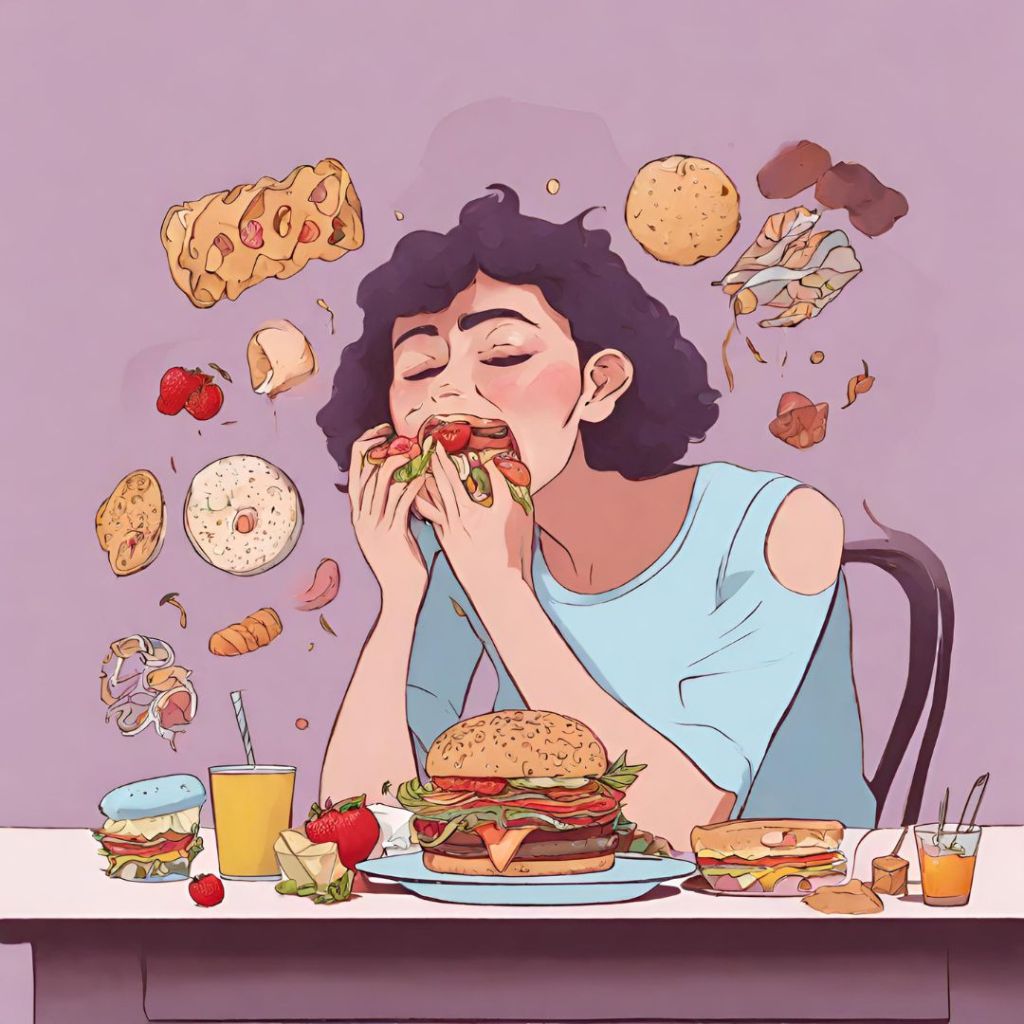
Consequences of emotional overeating
Emotional overeating, often a result of a disturbance in psychological balance, has far-reaching consequences on the health of the entire organism. It’s not just a matter of physical weight; emotional overeating can have profound psychological, physiological, and social consequences.
Psychological consequences are numerous. Emotional overeating is associated with a higher degree of depression and anxiety. A person falls into a vicious cycle, where emotional difficulties lead to overeating, which exacerbates feelings of depression and anxiety. Individuals who emotionally overeat often face low self-esteem, feelings of shame and guilt after overeating, which further worsens their emotional state. Finally, prolonged emotional overeating can contribute to the development of mood disorders, including bipolar disorder.
Physical consequences are primarily manifested as a disorder of body mass. Regular overeating leads to the accumulation of excess calories, resulting in overweight and obesity, which increase the risk of a range of health problems. Obesity is a very important risk factor for the development of type 2 diabetes (diabetes mellitus). Emotional overeating can contribute to insulin resistance, a key factor in the development of this disease. Also, the risk of hypertension, coronary heart disease, and stroke increases due to high blood pressure and lipid profile disorders associated with obesity. In addition, these individuals often have problems with the functioning of the digestive system, developing diseases such as gastroesophageal reflux disease (GERD) and non-alcoholic fatty liver disease. Gallstones, which later cause numerous problems for the functioning not only of the digestive system but also of the entire organism, often occur.
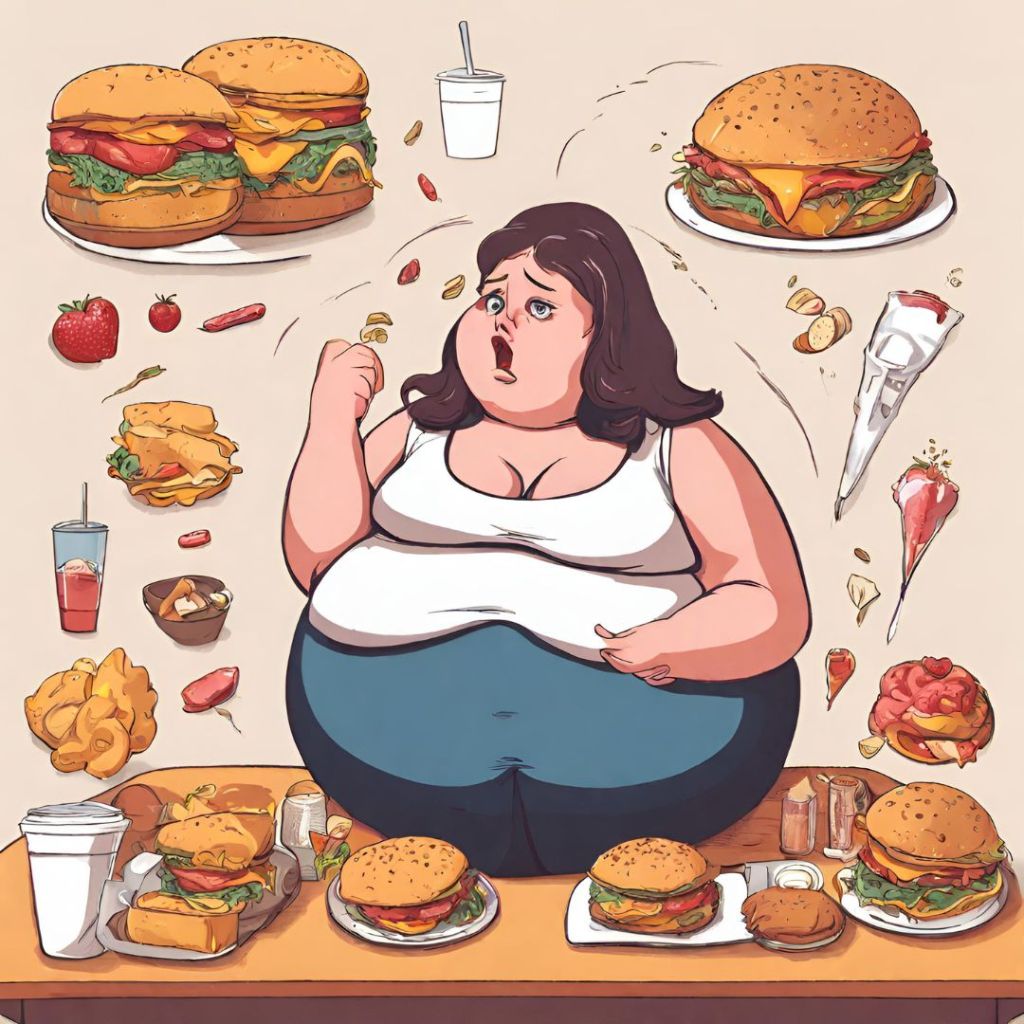
In addition to the above, individuals with emotional overeating also face social consequences in terms of social isolation (feeling isolated from the environment due to feelings of shame and fear of judgment) and a range of problems in relationships with other people.
Physical and mental health problems can reduce work capacity and productivity, and obesity and related diseases significantly increase health care costs, so this disorder also has its economic consequences on the life not only of the individual but also of the entire family and the community.
HOW TO RECOGNIZE EMOTIONAL OVEREATING?
Understanding and recognizing emotional overeating is crucial, both for individuals struggling with this problem and for health workers dealing with diagnosis and treatment. Although there are no formal diagnostic criteria, certain signs and behavior patterns can indicate the presence of this disorder.
Signs for recognizing emotional overeating
| Sign | Explanation |
| Repeated episodes of uncontrolled overeating | Frequent episodes of overeating during which an individual loses control over the amount of food consumed |
| Eating to the point of discomfort or even pain | Eating until beginning to feel stomach pain |
| Eating without feeling hungry | Consuming large amounts of food even when not hungry, often eating out of habit |
| Hiding eating habits | Sometimes individuals with this disorder eat in secret, hiding how much and what they have eaten |
| Feelings of guilt and sadness after a meal | After a heavy meal, pronounced feelings of guilt, shame, sadness, and depressive mood emerge |
Thus, this disorder can be diagnosed primarily based on self-assessment, but certainly also after a doctor’s and nutritionist’s examination through a detailed anamnesis, and based on psychological evaluation.
The treatment of psychological overeating is multidisciplinary, involving psychotherapy, nutritional counseling, and sometimes medical intervention.
HOW TO PREVENT THE ONSET/DEVELOPMENT OF EMOTIONAL OVEREATING?
A special emphasis in this article would be placed on prevention and self-help. Recognizing the first changes and signs in one’s behavior and preventing the progression of the disorder will greatly facilitate the treatment process and reduce complications that arise as a result of excessive food intake.
Prevention and self-help for emotional overeating include various strategies that focus on improving a person’s emotional state, developing healthy eating habits, and building stronger coping mechanisms.
The first measure would be education about overeating disorder so that one can recognize and identify emotional triggers, both in oneself and in one’s closest ones. In addition to identification, it is also necessary to understand emotional triggers such as overeating, stress, sadness, loneliness, and boredom. A food diary can help you identify the causes of overeating, where you will keep track of what, when, and why you eat.
To combat the overeating disorder, you need strong will and the adoption of several very important techniques. Primarily, it is necessary to learn to manage emotions with the help of a qualified psychotherapist, to create healthy nutritional strategies with a qualified nutritionist. Of course, physical activity and community support are indispensable.
Emotion management involves managing those emotional states that are a trigger for overeating. Practice relaxation techniques (e.g., deep breathing), develop positive thoughts (replace negative thoughts and words about yourself and your body with positive ones) and finally, it is most important to learn to recognize and express emotions in a healthy way.
When it comes to nutritional strategies, it is primarily necessary to establish regular meals at regular intervals to avoid extreme feelings of hunger, and then to focus on moderation instead of restrictive diets. Pay attention to portion size, and make sure to thoroughly chew your food and enjoy it without distractions from the external environment (phone, TV). And another important step after establishing regular meals is to ensure healthy snack options (fruit, nuts, etc.). Help yourself by creating a healthy environment by organizing the kitchen and food storage area in a way that encourages healthy choices. Reduce temptation – do not buy unhealthy foods.
Physical activity, in addition to helping reduce stress, release tension, and improve mood, also helps regulate body weight.
Support and understanding from family and friends are one of the factors that can greatly help and facilitate the fight with this disorder. Share your feelings with your loved ones. Also, you can join support groups that can provide you with a sense of community and understanding.
And finally, do not hesitate to seek professional help. Working with a psychotherapist can help you understand and resolve the emotional problems that contribute to overeating. It is also important to seek the help of a qualified nutritionist with whose help you will develop healthy eating habits and a healthy relationship with food. In addition to the direct benefit of visiting a nutritionist, it can also have a positive psychological effect in solving problems related to emotional overeating.
By implementing the aforementioned strategies, you can not only reduce the frequency of emotional overeating but also improve your overall health. It is important to emphasize that prevention and self-help are processes that require time and patience. However, in some cases, professional help and action according to the specific needs of the individual may be needed to ensure complete healing.
 Nutrition by MD Fatima
Leave a comment